
The Robot Economy
You designed your store for humans.
Eligible Shopify stores can be included in AI shopping channels, even if the merchant never actively chose to participate.
Shopify includes a plain-language store guide as part of this default storefront. It gives AI agents directions for browsing products, finding published policies and interacting with the store. The guide is one possible source alongside your catalog and product pages. Shopify supplies the default; your brand still owns the product facts and policies.
Thanks for reading The Robot Economy! Subscribe for free to receive new posts and support my work.
The guide sits at /agents.md on the store’s primary domain.
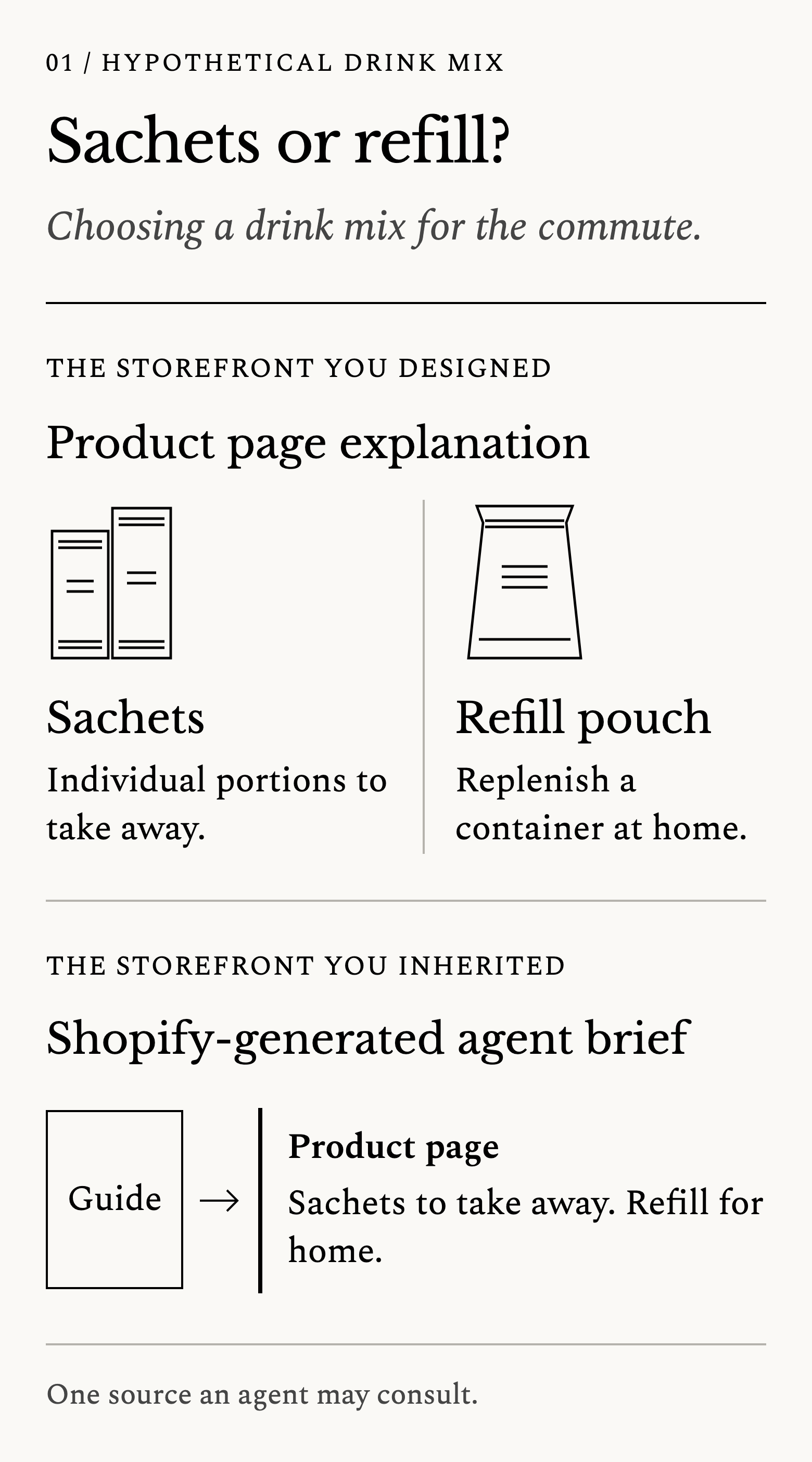
Consider a hypothetical shopper looking for a drink mix to take on the commute. The brand sells individual sachets and a refill pouch: sachets make individual portions easy to carry; the refill replenishes a container at home. The product page can explain that choice. The same distinction matters when an assistant helps the shopper choose.
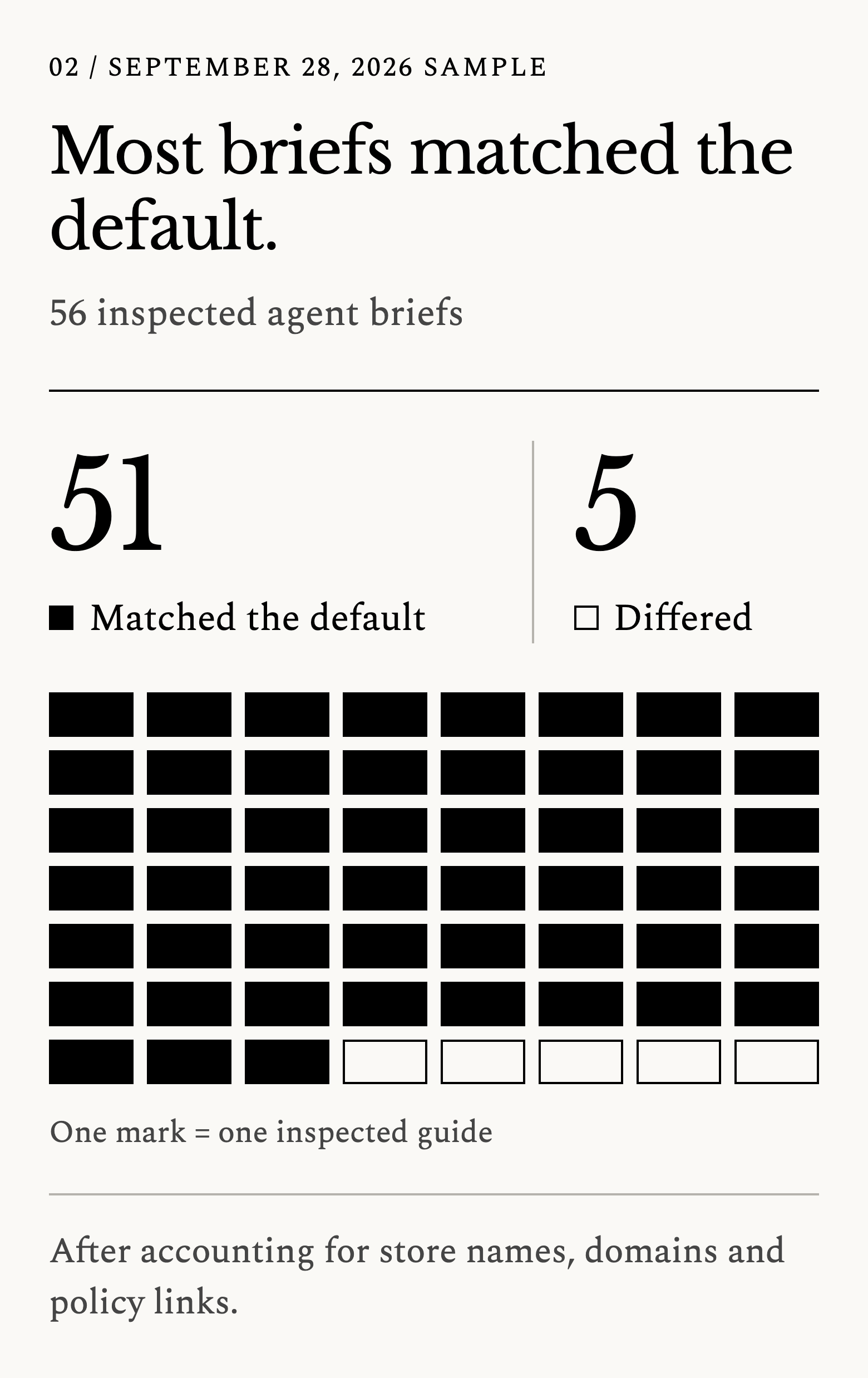
In STRFRNT’s September 28, 2026 research sample, most inspected guides matched Shopify’s default after accounting for store names, domains and policy links.
David Protein’s guide shows one way to go beyond that common starting point. Its “Key Collections” section links directly to Best Sellers, Gold bars and Bronze bars.
David Protein’s collection links show how a guide can reflect a brand’s merchandising choices. For the commuter in our example, explaining why sachets fit the morning routine could help an assistant recommend the appropriate format. A guide can point toward a relevant collection or the product-page explanation that makes the choice clear.
A more deliberate guide could carry more of your brand’s merchandising judgment into the shopping conversation.
A human storefront has to balance presenting useful detail with overwhelming the shopper. For agents, brands could make more information available in organized resources, with the guide pointing to the relevant explanation. A commuter may care most about portability; someone stocking a shared office kitchen may need to understand portions, preparation and storage. An assistant could find the relevant details and turn them into a focused answer. The resource can be deeper because the shopper isn’t being asked to read it all.
Shopify says its managed guide meets most stores’ needs and stays aligned with their commerce configuration. The default can already point to a clear product-page explanation, and customizing the guide brings maintenance responsibility. Still, a broadly useful default may leave room to make your brand’s particular reasons to buy easier for an assistant to find and use.
Which product choice matters most?
The opportunity may be clearest in the product choices a brand spends the most time explaining. If those differences are clear in the information the default guide points toward, the default may be enough. Where they are hard to find or understand, clearer product information could give an assistant more to work with.
Exploring what this means for your store? We’d welcome your questions and observations at hello@strfrnt.ai.
Sources and scope
STRFRNT’s research sample included 56 Shopify store guides captured on September 28, 2026. Of the five that differed from Shopify’s default, two were classified as merchant-edited.
We reviewed Shopify’s documentation on October 8, 2026. David Protein’s guide was also checked that day and matched its September 28 capture exactly.
Thanks for reading The Robot Economy! Subscribe for free to receive new posts and support my work.